Originally published in the February 2016 issue of Forever Young magazine.
Staring at the piles of garden tools, old paint cans, and dust-covered appliances that haven’t been used in decades, my mother and I are a bit daunted. The basement, the realtor tells us, is a good place to begin. But how do you begin to sort through forty-five years of living in a house that was the home for three children and became the emotional center of a marriage that endured for more than half a century?
Two winters ago, my mom ventured outside to retrieve a bag of rock salt from her car. She slipped on the icy sidewalk and hit the back of her head. Having managed to lift herself up, she walked gingerly back inside and called me at work. I rushed to her house, where I found her in the kitchen, nursing a huge lump with a hastily made ice pack. We couldn’t detect any blood, but we knew a trip to the ER was a sensible idea. Mom ended up having to spend the night in the hospital; they administered a CT scan to confirm the absence of internal bleeding and hooked her up to some sort of monitor. Throughout all of this, my thoughts intermittently shifted to another day from seven years earlier. It was in April of 2007 when my father, then 75, suffered a hemorrhagic stroke. From the minute he was found lying on the floor at home to the moment Mom, my siblings, and I gathered around his bed in the ICU to say goodbye, I felt the inexorable pull of life’s harsh transitions.
The aftermath of Dad’s death left us all a little numb, and more than a bit disjointed and lost. We each were adrift on the sea of grief in our own private vessel; the pain might have been broadly shared, but the process of experiencing it was different for each of us. I still can’t begin to imagine the depths of sorrow Mom endured those first few years. I only wish I could have been better equipped to help her through them.
I think back to the happiest days of my youth—and even the saddest—and realize how fortunate I was to be grounded in the love of family. We weren’t wealthy compared to other families in our neighborhood, but I never wanted for anything. And although it’s hard to confront the mortality of those we love, I realize now that the inevitability of aging and dying is exactly what makes loving and living so real—and eternal. Even if we become parents ourselves, I don’t think we fully grow up until we witness the frailty, or experience the loss, of our own parents.
This April marks nine years since Dad died. A lot has changed—once-tiny grandchildren are now in high school or college—and more changes are afoot. The details of the next chapter in Mom’s life may still be unknown, but the urgency with which we prepare for it is real.
And so back to the cellar and all those piles of memories we go—it’s the only way to work up to the main floors and the even dustier attic, where more surprises await. Although the task is monumental and the sorting through of things bittersweet, I quietly embrace this gift. Spending time with a woman who, at 84, is still remarkably spirited, becomes a chance to get to know my mother even better. To hear more family stories—ones I hadn’t heard before—and to create new memories.
I believe it was psychiatrist and author M. Scott Peck who wrote that those who obsess about the past fear the future, and those who fixate on the future have unresolved issues with their past. The key is to find the balance and truly live in, and for, the moment. I think love is a powerful force with which to meet the present, indulge in memories that can transport us, albeit fleetingly, back to the past, and most importantly, stay hopeful and focused for the future.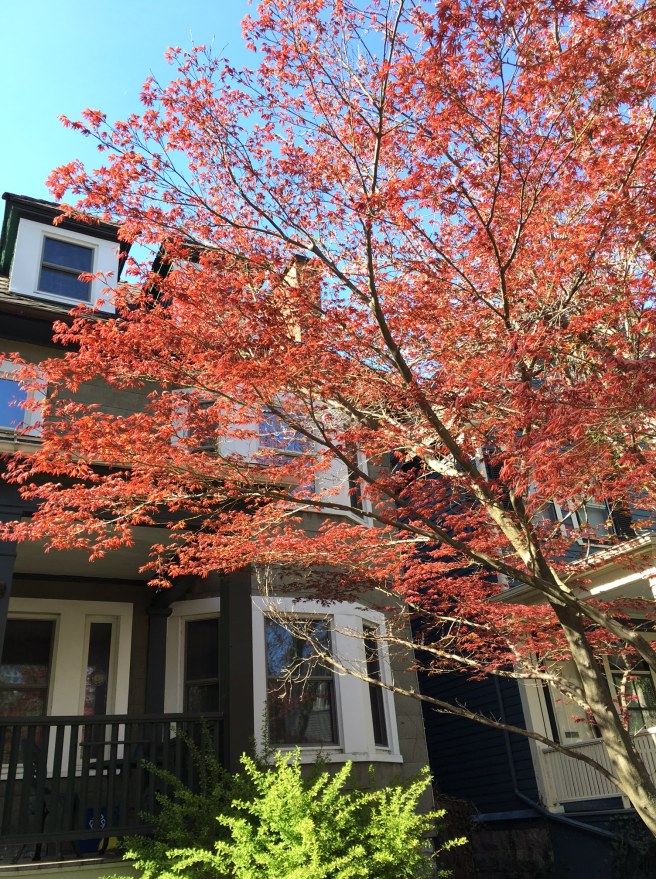
The Japanese maple tree in front of the family house
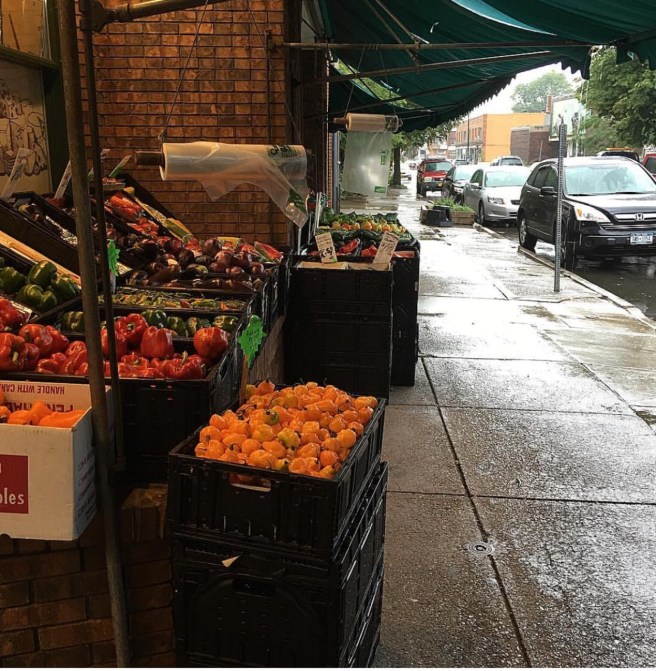 Guercio & Sons outdoor produce stand on a rainy Saturday
 resilience & grace